
WHY TEST FOR RADON?
Radon is invisible, odorless, and tasteless — but it is the #1 cause of lung cancer next to smoking. Every New Brunswick home is at risk. Testing is the only way to know.
WHAT IS RADON GAS?
Radon is a naturally occurring radioactive gas produced by the breakdown of uranium in soil, rock, and water. It has no color, no odor, and no taste — making it completely undetectable without proper testing equipment.
Radon seeps up through the ground and can accumulate to dangerous levels inside homes, schools, and workplaces. When you breathe radon-contaminated air over time, the radioactive particles damage lung tissue and significantly increase your risk of lung cancer.
Health Canada estimates that radon causes approximately 3,200 lung cancer deaths per year in Canada — more than car accidents. The good news: it's easy to test for and highly treatable with professional mitigation.
⚠ RADON IS THE #1 CAUSE OF LUNG CANCER NEXT TO SMOKING
1 in 4 New Brunswick homes exceed Health Canada's guideline of 200 Bq/m³. Is yours one of them?
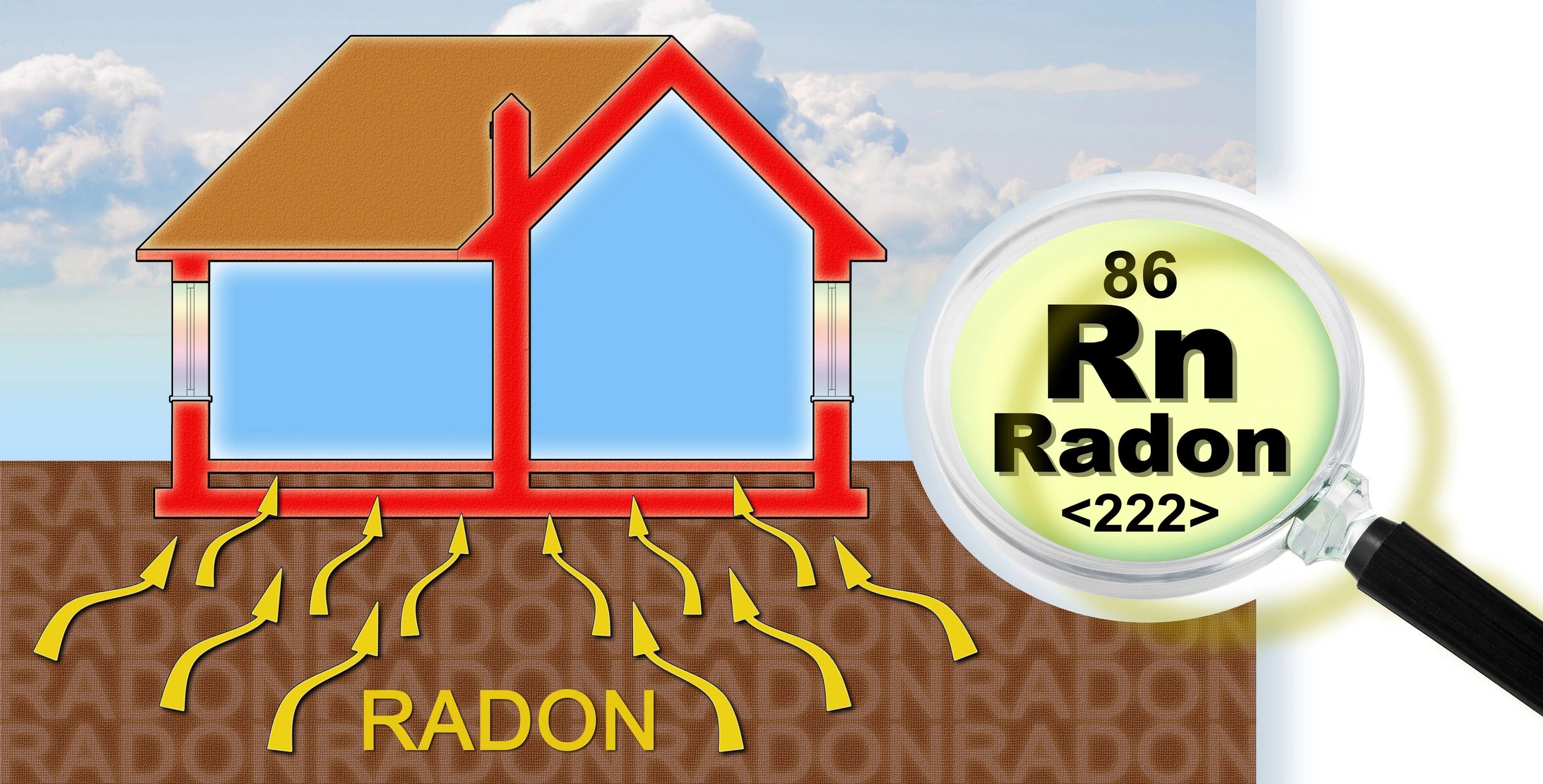
HOW RADON ENTERS YOUR HOME
Radon can enter any home through multiple pathways — regardless of age, size, or construction type
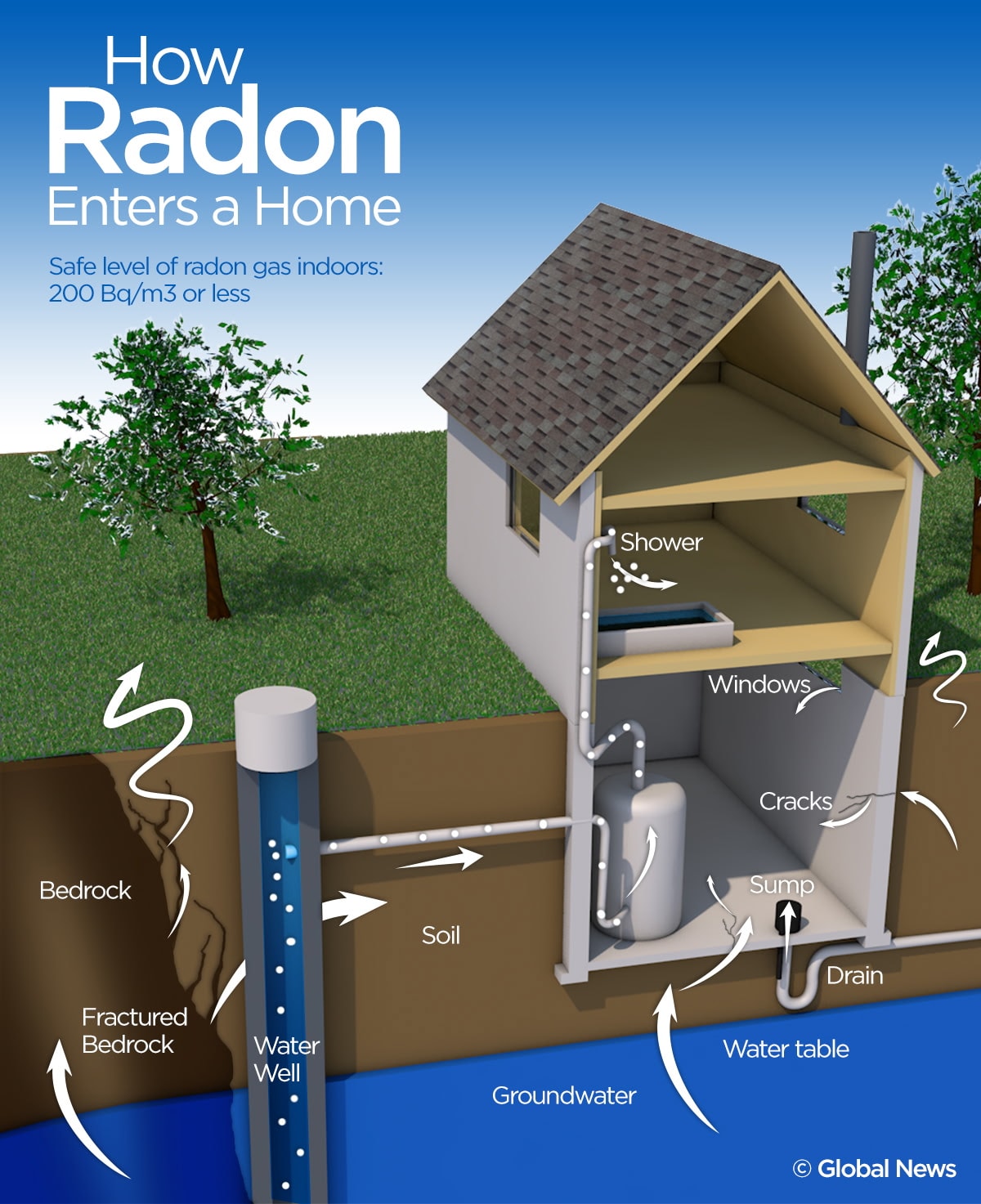
Radon seeps through cracks and gaps in concrete foundations, floors, and walls.
Gaps at construction joints where walls meet floors are common radon entry points.
Openings around pipes, wires, and other utility penetrations allow radon to enter.
Floor drains and sump pits can be direct pathways for radon from the soil below.
Hollow block walls can channel radon from the soil into living spaces.
Well water can release radon into the air when used for showering or cooking.
THE HEALTH RISKS OF RADON EXPOSURE
Radon exposure is a serious, cumulative health risk. The longer you're exposed to elevated radon levels, the greater your risk of developing lung cancer. Smokers exposed to radon face an even higher risk — the combination is particularly dangerous.
Below the Canadian average. Continue to monitor.
Consider mitigation, especially for long-term occupants.
Above Health Canada's guideline. Mitigation strongly recommended within 2 years.
Significantly elevated. Mitigation recommended within 1 year.
Source: Health Canada Radon Guidelines. Bq/m³ = becquerels per cubic metre.
WHO SHOULD TEST FOR RADON?
Health Canada recommends radon testing for ALL homes — but these situations make testing especially important
ALL HOMEOWNERS
Every home — new or old, with or without a basement — can have elevated radon. Health Canada recommends testing all homes.
BUYING OR SELLING
Radon testing is increasingly expected in real estate transactions. Protect your investment and your family's health.
BASEMENT DWELLERS
Radon concentrations are typically highest in lower levels. If you spend significant time in a basement, testing is critical.
FAMILIES WITH CHILDREN
Children are more vulnerable to radiation exposure. Protect your family's long-term health with certified radon testing.
ENERGY-EFFICIENT HOMES
Tightly sealed, energy-efficient homes trap radon more effectively. Modern construction can actually increase radon risk.
SMOKERS & EX-SMOKERS
The combination of smoking and radon exposure dramatically increases lung cancer risk. Testing is especially urgent.
RADON IN NEW BRUNSWICK
New Brunswick's geology — including granite bedrock and uranium-rich soils — means many homes across the province are at elevated risk for radon. 1 in 4 New Brunswick homes exceed Health Canada's guideline of 200 Bq/m³ — far above the national average.
Radon is the #1 cause of lung cancer next to smoking. Yet most New Brunswick homeowners have never tested. Radon Plus is a locally owned and operated company based in Quispamsis, NB. We understand New Brunswick homes, local geology, and the specific radon risks facing our communities.
FREQUENTLY ASKED QUESTIONS
Everything you need to know about radon testing and mitigation
Radon is a naturally occurring radioactive gas produced by the breakdown of uranium in soil, rock, and water. It has no color, no odor, and no taste — making it completely undetectable without proper testing equipment.
When radon decays, it releases radioactive particles that can be inhaled and become lodged in lung tissue. Over time, this radiation damages lung cells and can lead to lung cancer. Radon is the #1 cause of lung cancer next to smoking in Canada, responsible for approximately 3,200 deaths per year.
Radon seeps into homes through cracks in foundations, construction joints, gaps around service pipes, cavities in walls, and through the water supply. Any home — new or old, with or without a basement — can have elevated radon levels.
Health Canada's guideline is 200 Bq/m³ (becquerels per cubic metre). If your home tests above this level, mitigation is strongly recommended. The Canadian average is about 47 Bq/m³, but many New Brunswick homes test significantly higher.
Short-term tests take as little as 4 days and give you a quick snapshot of radon levels. Long-term tests (3–12 months) provide the most accurate picture of your home's average radon concentration. Our certified team will recommend the right test for your situation.
Absolutely. Radon mitigation systems are highly effective — typically reducing radon levels by 80–99%. The most common solution is a sub-slab depressurization system, which draws radon from beneath the foundation and vents it safely outside. Our certified team guarantees results.
Yes. New homes are not immune to radon. In fact, modern energy-efficient construction can trap radon more effectively than older homes. Health Canada recommends testing all homes regardless of age or construction type.
Radon testing is very affordable — especially compared to the health risks of untreated radon. Contact us for a free consultation and we'll provide transparent pricing for testing and mitigation services tailored to your home.
READY TO PROTECT YOUR HOME?
Don't wait. Radon testing is fast, affordable, and could save your life. Contact our certified New Brunswick team today for a free consultation.